

About the Program
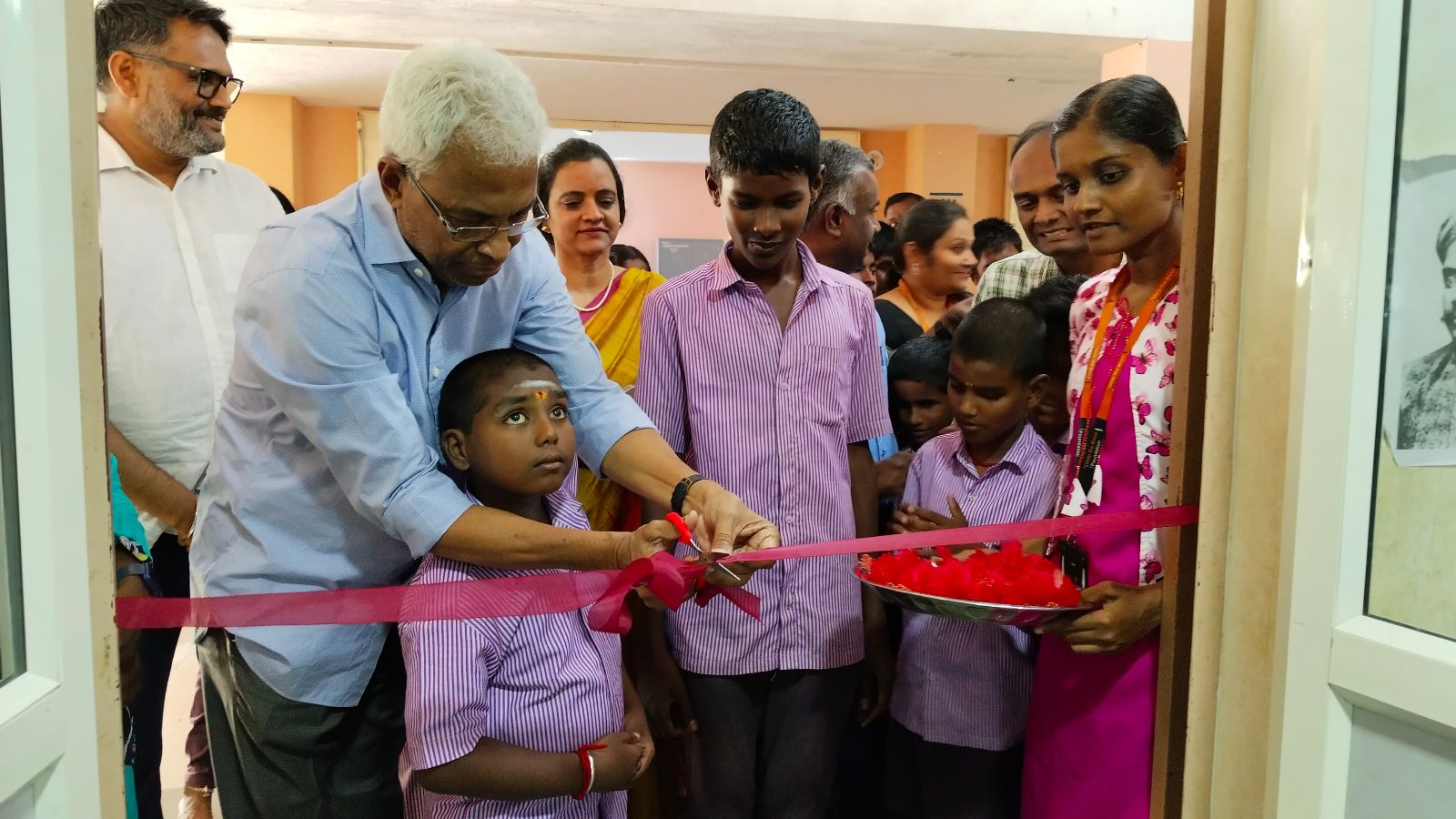
The School Intervention Program (SIP) earlier known as Early Intervention Program, is Help The Blind Foundation’s umbrella initiative for all school-level interventions aimed at preparing visually impaired students for higher education, employability, and independent living.
By engaging students early—primarily across Grades 9–12—SIP focuses on building foundational skills, confidence, and exposure at a stage where timely support can significantly influence
Initially piloted in Tamil Nadu, the program has demonstrated strong, measurable impact and is being strengthened and expanded for wider implementation.
SIP currently comprises two core components that together address academic readiness, co-curricular development, and inclusive learning:
Why SIP Exists
Students with visual impairment often reach college without adequate exposure to Computers and assistive technology, English communication skills, and Orientation and independent mobility. These gaps affect academic performance, confidence, and long-term outcomes. SIP intervenes early, when skill-building has the highest impact.
SIP – STEP‑UP - Students’ Training for Empowerment and Progress
STEP‑UP is the co‑curricular component of SIP, designed to equip students in Grades 9–12 with essential life and learning skills that support success in integrated educational environments.
The program focuses on:
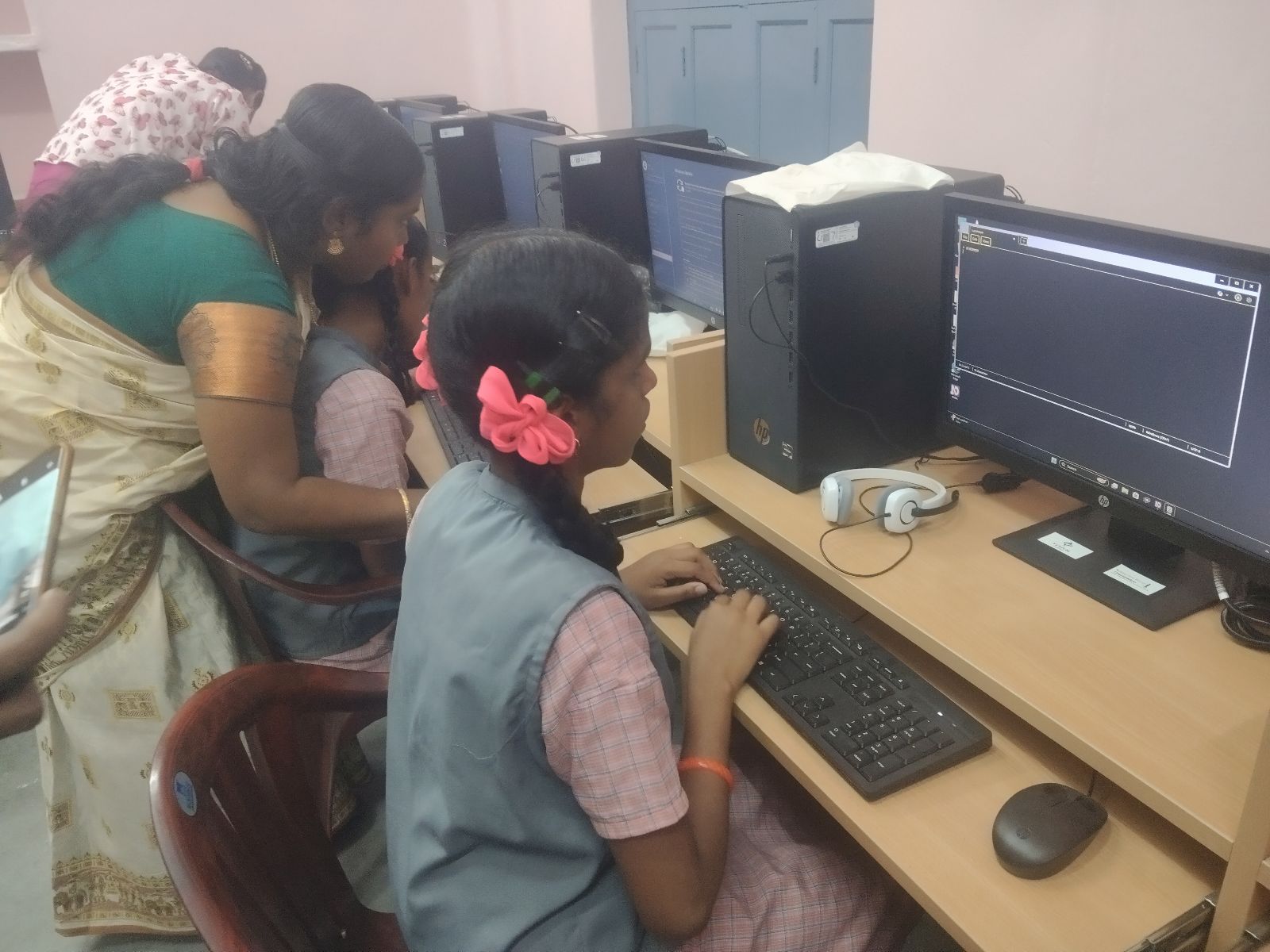
- Digital Literacy: Computer fundamentals, typing skills, and use of assistive technologies
- Communication English: Spoken and written communication to build confidence and classroom participation
- Orientation & Mobility: Cane techniques, spatial awareness, and independent navigation
In addition, STEP‑UP includes extra‑curricular offerings such as Music and Physical Literacy (with a focus on football) across multiple grades, supporting holistic development, self‑expression, and well‑being.
Program at a Glance - AY 2024-25
- 174 students reached (Classes 9–12)
- 65 blind students | 109 students with low vision
- 3 locations: Poonamallee, Thanjavur, Arni
- 750+ hours of hands-on training delivered
Measured learning outcomes include:
- Typing speed improved from 5 WPM (50% accuracy) to 17 WPM (75% accuracy)
- ~40% improvement in English speaking and writing proficiency
- Stronger digital independence, mobility confidence, and classroom participation
Program Milestones - STEP-UP
- Training of Trainers (ToT) conducted in Chennai and Bangalore
- Curriculum strengthened with project-based learning and support for slow learners
- New computer labs set up in Arni and Trichy
- Thanjavur lab upgraded
- Laptops redistributed to address hardware shortages
- Operational challenges were met with additional classes and flexible resource deployment.
SIP – STEM
The STEM Project is a focused initiative by Help The Blind Foundation to make science and mathematics learning accessible, engaging, and meaningful for visually impaired students.
Implemented in collaboration with Vision Empower Trust, the program addresses a critical gap in school education where STEM subjects are often inaccessible due to their visual nature and the lack of adaptive teaching tools. This project aims to address these challenges through:
- Tactile and experiential learning tools
- Inclusive teaching methodologies
- Trained and supported educators
By strengthening conceptual understanding in science and mathematics at the school level, the STEM component expands students’ academic choices and opens pathways to higher education and future careers in science, technology, engineering, and mathematics.
Program Milestones - STEM
The STEM component under the School Intervention Program has continued to evolve through strong partnerships and system‑level support:
Titan Company Limited approved HTBF’s proposal for the School Intervention and STEM Program (2025–26), enabling the next phase of program strengthening and scale.
The Government of Tamil Nadu approved the appointment of dedicated mathematics and science teachers in participating government schools.
Six teachers have already been onboarded, strengthening in‑school delivery and continuity of inclusive STEM instruction.
Together, STEP‑UP and the STEM component form a cohesive school‑level framework that equips visually impaired students with the skills, confidence, and foundations needed to progress successfully into higher education and beyond.
Stronger digital independence and classroom confidence